
If you’ve ever wondered how a promising drug moves from a lab bench to the pharmacy shelf, the answer lies in technology transfer in the pharmaceutical industry—often called tech transfer pharma. This behind-the-scenes process is one of the most critical yet misunderstood elements of drug development and commercialization. In this guide, we’ll break it down in plain language and show why it’s so indispensable for patients and companies alike.
What Does Technology Transfer in Pharmaceuticals Really Mean?
At its core, pharmaceutical technology transfer is the process of taking knowledge, procedural methods, and systems developed in one setting—like a research lab or pilot plant—and transferring them to another setting, such as a commercial manufacturing site. This might involve internal teams or collaborations with external partners like contract manufacturers.
In practical terms, technology transfer in pharma ensures that:
- The science behind a drug is fully understood by both sending and receiving teams
- Manufacturing remains consistent, safe, and compliant
- Quality is preserved no matter where the product is made Pharmaceutical Technology
Why Is Technology Transfer Important in the Pharmaceutical Industry?
The importance of technology transfer in the pharmaceutical industry cannot be overstated. Successful transfer means:
1. Reliable Product Quality and Safety
By transferring detailed process knowledge and quality standards, companies ensure that patients everywhere get the same safe, effective medicine.
2. Faster Time-to-Market
Clear technology transfer accelerates scale-up and release, helping innovative treatments reach patients sooner.
3. Regulatory Compliance
Modern regulatory frameworks (including ICH Q10, WHO, and regional GMP requirements) emphasize knowledge sharing and documented process control throughout the lifecycle of a product.
In fact, processes like these are so important that organizations beyond industry—such as the U.S. Food and Drug Administration (FDA)—operate programs to support scientific exchange and commercialization pathways. You can learn more from the FDA’s Technology Transfer Program here. FDA Technology Transfer Program Overview
How Technology Transfer Works in Pharma
The technology transfer of pharmaceutical products generally follows these steps:
- Planning and Assessment: Experts define which processes and documentation will move, anticipate challenges, and establish success criteria.
- Knowledge and Data Sharing: Teams exchange everything from formulation details to analytical methods that are vital for producing the drug.
- Equipment and Process Alignment: Manufacturing machinery may differ between locations. Understanding those differences and adapting accordingly is a key part of tech transfer in pharma industry.
- Verification and Validation: Before full-scale production begins, pilot runs and validations confirm that the transferred process performs reliably.
Types of Technology Transfer in Pharmaceuticals
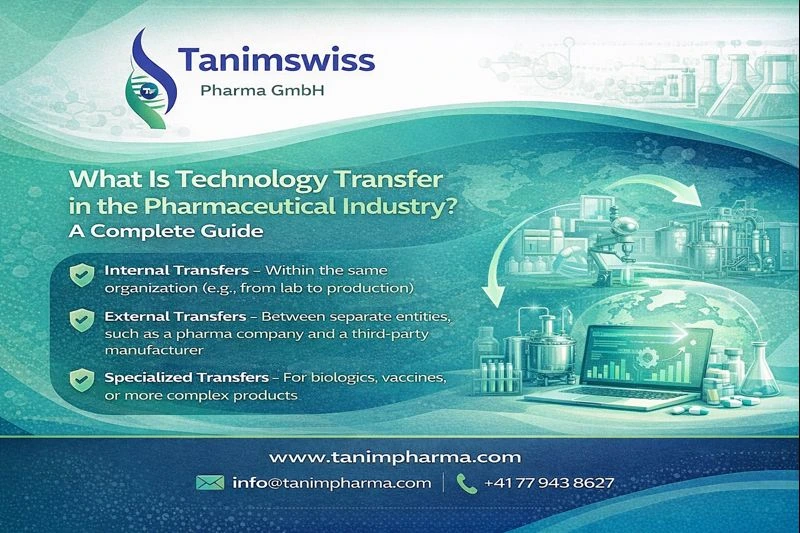
- Internal Transfers – Within the same organization (e.g., from lab to production).
- External Transfers – Between separate entities, such as a pharma company and a third-party manufacturer.
- Specialized Transfers – For biologics, vaccines, or more complex products that demand extra precision and documentation.
When handled externally, many companies choose pharma technology transfer services to manage the intricacies and regulatory expectations.
Challenges Companies Face
Even with clear frameworks, technology transfer in pharma can be complex. Some common hurdles include:
- Miscommunication between sending and receiving teams
- Equipment and process differences across sites
- Incomplete documentation
- Aligning quality systems and regulatory requirements across borders
These are reasons why choosing the right partners and services—like the pharma technology transfer services offered at Tanim Pharma—can make all the difference.
The Human Side of Tech Transfer
Behind every technology transfer success story are dedicated scientists, engineers, quality specialists, and project managers collaborating across time zones and functions. It’s not just paperwork—it’s communication, trust, problem-solving, and shared responsibility.
Looking Ahead: Innovation and Tech Transfer
As pharmaceutical manufacturing evolves, so does technology transfer in the pharmaceutical industry. Digital tools like data analytics, real-time monitoring, and even predictive AI models are helping make transfers smoother and more reliable than ever.
Final Thoughts
Technology transfer in pharma isn’t a one-off task—it’s a strategic bridge that connects discovery with real-world impact. Whether you’re scaling up production, entering new markets, or partnering with a contract manufacturer, the strength of your technology transfer process often determines the success of your product.
Want to dive deeper? Explore tailored pharma technology transfer services with Tanim Pharma and start turning knowledge into impact.