
In the world of drug development and manufacturing, technology transfer in the pharmaceutical industry is a critical step that can make or break a product’s success. Often called tech transfer pharma, this process involves moving knowledge, processes, and quality systems from one setting to another — for example, from a lab to a commercial production site or between companies.
While many large pharmaceutical companies handle tech transfer internally, an increasing number are exploring outsourcing technology transfer in the pharmaceutical industry to tap into specialized expertise and streamline operations. Below, we break down what this really means, the key benefits, the potential pitfalls, and how to navigate the decision.
What Does Pharmaceutical Technology Transfer Entail?
At its core, pharmaceutical technology transfer is all about translating innovation into reliable, scalable production. When a promising drug moves from R&D to full-scale manufacturing, teams must share everything from formulation details and analytical methods to quality standards and equipment specifications.
This isn’t just paperwork: it’s a deeply technical process involving people, data, and compliance — the kind of work where mistakes can lead to production delays, regulatory challenges, and even patient safety risks. Because of that, many companies decide to leverage external expertise.
Why Outsource Tech Transfer in Pharma?
Outsourcing tech transfer in pharma industry means partnering with experts who specialize in guiding complex transitions. These pharma technology transfer services can help ensure that every step — from pilot runs to validation batches — is handled with precision and regulatory rigor.
Here are some of the top reasons companies choose this route:
Pros of Outsourcing Technology Transfer in the Pharmaceutical Industry
🧠 1. Access to Deep Expertise
External partners understand both science and regulation. They’ve seen a wide range of products and challenges related to technology transfer of pharmaceutical products, giving them an edge in anticipating issues early.
🚀 2. Faster Time-to-Market
Well-executed outsourcing can help accelerate planning, transfer, and validation. This means drugs get out of the lab and into patients’ hands quicker — a clear advantage in competitive markets.
💰 3. Cost Efficiency
Rather than building and maintaining an in-house tech transfer team (which can be expensive), outsourcing turns fixed costs into flexible, project-based spend.
📄 4. Regulatory Confidence
Experienced tech transfer partners know what regulators expect. This reduces the risk of surprises during inspections and supports compliance with guidelines from authorities like the FDA, EMA, and ICH. For more on FDA requirements, check out the FDA’s Technology Transfer Program.
💡 5. Better Focus on Core Strengths
Outsourcing frees up internal teams to focus on innovation and R&D instead of operational execution.
Cons of Outsourcing Technology Transfer in Pharma
⚠️ 1. Less Hands-On Control
Handing over key activities to an external team means you have to trust someone else with your valuable processes. That’s why strong communication and oversight are essential.
📦 2. Knowledge Transfer Risks
If the original data or documentation isn’t complete, or if communication breaks down, it can lead to misinterpretation during the transfer — especially when dealing with technology transfer in pharmaceuticals involving complex products like biologics.
🔐 3. Intellectual Property Concerns
Sharing sensitive information outside your organization always requires careful contracts, non-disclosure agreements, and security protocols.
⏳ 4. Dependency on Partner Schedules
External service providers often juggle multiple clients, so alignment on timelines and priorities is important.
When Outsourcing Tech Transfer Makes Sense
Outsourcing is especially valuable when:
- You’re entering new markets and need scalable manufacturing solutions
- Your team lacks specific tech transfer expertise
- You’re dealing with advanced, complex products
- You want to accelerate validation and regulatory readiness
If you’re exploring this path, companies like Tanim Pharma’s Pharma Technology Transfer Services provide tailored support — from planning to execution — to help mitigate risks and drive successful outcomes.
Best Practices for Outsourced Technology Transfer
To make outsourcing successful, consider these tips:
- Define Clear Milestones & KPIs: Shared goals help both sides stay aligned.
- Document Everything: Reliable documentation is the backbone of successful technology transfer pharma.
- Keep Communication Open: Regular updates, site visits, and cross-team meetings build trust and reduce misunderstandings.
- Preserve Knowledge Internally Too: Even when outsourcing, internal teams should stay engaged and informed.
Final Thoughts
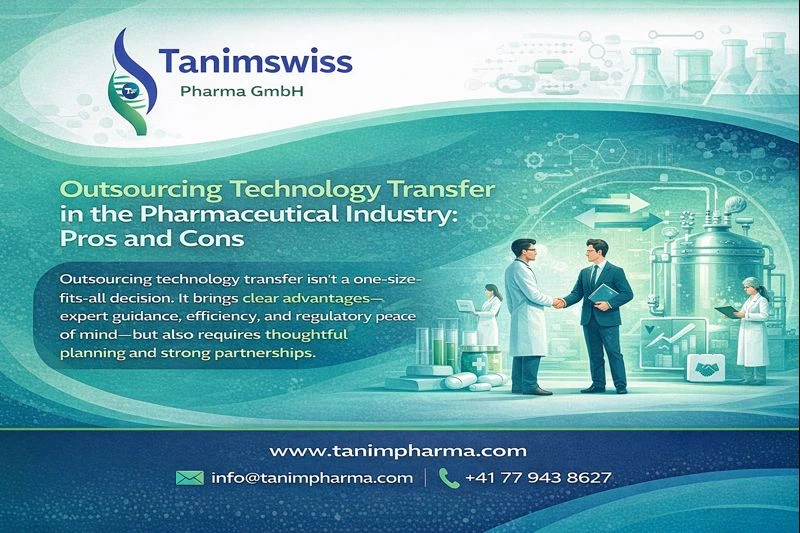
Outsourcing technology transfer in the pharmaceutical industry isn’t a one-size-fits-all decision. It brings clear advantages — expert guidance, efficiency, and regulatory peace of mind — but also requires thoughtful planning and strong partnerships.
Whether your company decides to keep tech transfer in-house or work with experienced pharma technology transfer services, understanding the trade-offs helps you make better decisions and ultimately deliver high-quality medicines to patients around the world.
Looking for a partner to navigate tech transfer? Explore our Pharma Technology Transfer Services to see how we can help!